> For the complete documentation index, see [llms.txt](https://doc.k8studio.io/llms.txt). Markdown versions of documentation pages are available by appending `.md` to page URLs; this page is available as [Markdown](https://doc.k8studio.io/documentation/helm-view/repositories-and-charts.md).
# Repositories and Charts
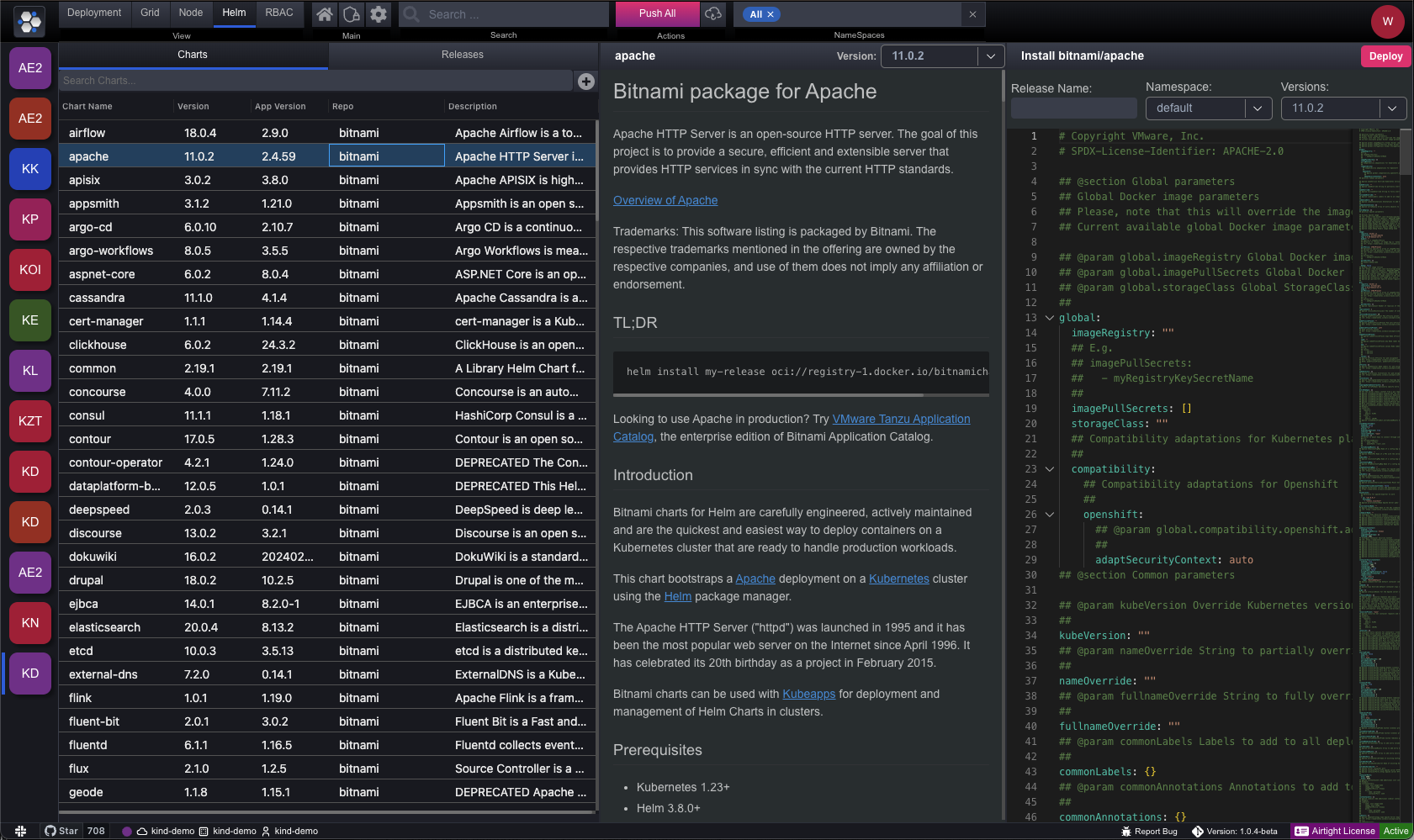
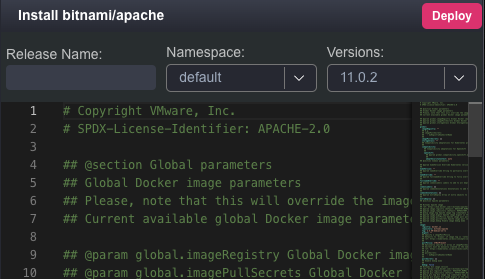
The first time we open the Helm View, the Chart Tab is selected. On the left panel, we can see all the available charts present in the system. In the center, when we select a chart, we can view its documentation. On the right, we have the Install panel where we can choose the release name, the namespace where to install the chart, and the version that we want to install. Additionally, there's a YML editor with all the values that we can change to customize our release.
**Managing repositories:**
To manage repositories, simply click on the plus button located on the header of the chart list view. This action will display the Helm Repositories dialog, which you can use to manage the installed repositories.
To add a repository, click on "Add" and define the name and URL location of the repository. To delete a repository, select the repository and click on "Delete."
**Find a chart and create a Helm release:**
he Helm view primarily facilitates the installation of charts. To locate the desired chart, you can utilize the search bar in the chart list. Upon finding it, clicking on the row automatically displays the documentation in the center panel, along with the Install panel containing all the chart value options.
To install the chart, provide your release with a name, select a namespace, and choose the chart version. Utilize the YAML editor to set custom values for your YAML chart. Once you're satisfied with the configuration, click on "Deploy" to proceed with the installation.