> For the complete documentation index, see [llms.txt](https://doc.k8studio.io/llms.txt). Markdown versions of documentation pages are available by appending `.md` to page URLs; this page is available as [Markdown](https://doc.k8studio.io/documentation/terminal.md).
# Terminal
Terminal
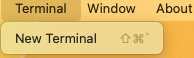
To open a terminal after selecting a cluster, it can be done in three different ways:
1. Using the application Menu:
2. When selecting a Pod and click on SSH:
Using the side editor, the user can click on "SSH" to connect to the selected Pod via SSH. If the Pod has more than one container, a modal will appear to choose which container to connect to.
3. When selecting a Pod and click on LOG: \
We open a terminal that displays the logs of the selected Pod. If the Pod has more than one container, a modal will appear to choose which container to connect to.
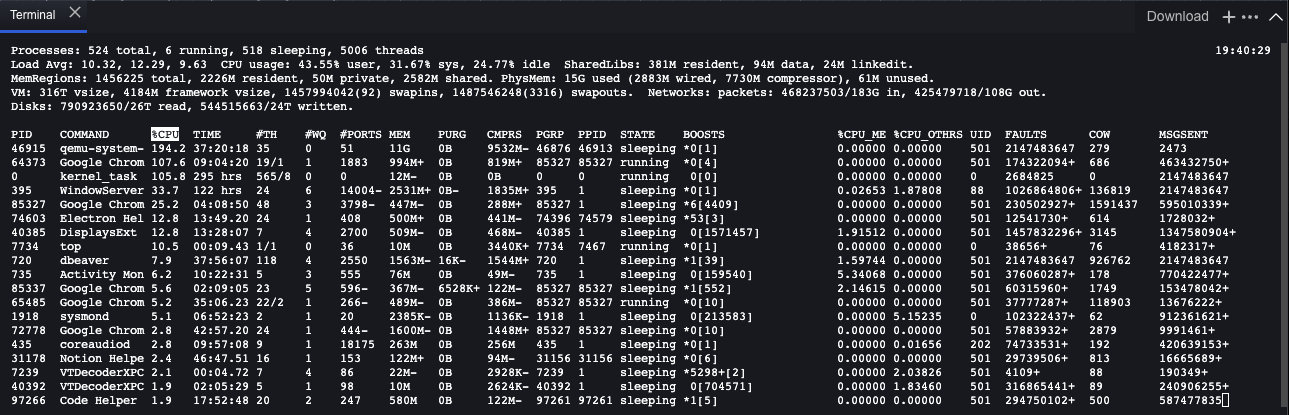
The K8studio terminal provides the following functionality.
* Download content.
* Copy selection.
* Open a new terminal
* Selected bash to use in the terminal:
* Search text in the content of the terminal.